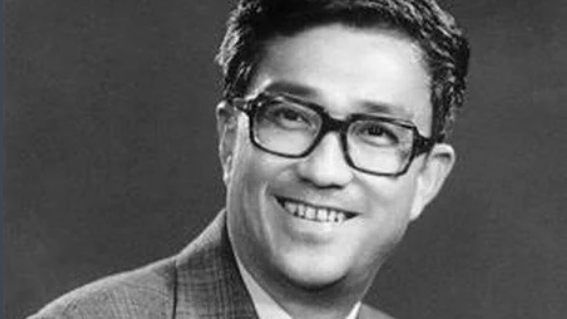
Xie Jin
谢晋
- 分类: 艺术瑰宝
- ID: 1867049551646212097
Home CategoryArtsXie JinPlay3.5 minsXie Jin, born November 21, 1923, in Shangyu, Zhejiang, China, was a filmmaker educated in drama at Jiang'an School of the Arts, part of the Central Academy of Drama, mastering cinema's technical and narrative aspects.ShareCatalogue1. Early Life and Education2. Career Beginnings3. Breakthrough and Signature Works4. The Red Detachment of Women5. Contribution to Chinese Cinema6. Legacy and Influence
Early Life and Education
Xie Jin was born on November 21, 1923, in Shangyu, Zhejiang province, China. He showed an early interest in the arts and later pursued film studies, eventually enrolling in the Department of Drama at Jiang'an School of the Arts, which was part of the prestigious Central Academy of Drama. His formal education laid a strong foundation for his future career in filmmaking and allowed him to master the technical and narrative aspects of cinema.
Career Beginnings
Xie Jin began his film career at the Shanghai Film Studio, which was one of the leading film production companies in China. His early work laid the groundwork for his future success as a director. By mastering the craft of storytelling and understanding the nuances of the film medium, Xie established himself as a visionary filmmaker and a pioneer in the Chinese film industry.
Breakthrough and Signature Works
Xie Jin's breakthrough came with his film Women's Basketball Player No. 5 in 1958, which was acclaimed for both its innovative storytelling and its engagement with social themes. This success was followed by several other notable films that defined his career and impacted Chinese cinema. Among these films were The Red Detachment of Women (1961), Stage Sisters (1965), and Hibiscus Town (1986), each exploring critical historical and cultural narratives within China.
The Red Detachment of Women
The Red Detachment of Women (1961) is one of Xie Jin's most influential films, based on the true story of female Communist soldiers on Hainan Island during the Chinese Civil War, specifically in the early 1930s, a period associated with the Jiangxi Soviet. The film was a remarkable success and was later adapted into a ballet by the National Ballet of China. It gained international recognition when the ballet adaptation of 'The Red Detachment of Women' was performed for US President Richard Nixon during his visit to China in 1972. The film's impact extended beyond its initial release, inspiring adaptations into Peking Opera productions, TV series, and an opera staged at the National Center for the Performing Arts.
Contribution to Chinese Cinema
Throughout his career, Xie Jin was known for his ability to create films that resonated with audiences both in China and internationally. He was skilled at addressing significant social and political themes, thereby contributing to the cultural dialogue within China. His films often depicted the struggles and triumphs of ordinary people, providing insights into the human condition and reflecting the socio-political changes in China during his lifetime.
Legacy and Influence
Xie Jin's legacy in Chinese cinema is profound. He is often credited with shaping the development of modern Chinese cinema and influencing generations of filmmakers. His storytelling techniques and thematic focus on humanistic values resonate in the works of contemporary Chinese directors. Xie Jin passed away on October 18, 2008, but his films continue to be celebrated for their artistic merit and their enduring impact on Chinese culture and cinema. Article reference1. Superstar actress Chen looks back on early years. chinadaily.com.cn. 20192. Heroes coming. chinadaily.com.cn. 20173. Opera revives story of young female soldiers. chinadaily.com.cn. 2017Photo Gallery(1 picture)CategoriesArtsTagArtistsFilm and TVRelatedYongle EncyclopediaThe Eight Hundred (Film)Catalogue1. Early Life and Education2. Career Beginnings3. Breakthrough and Signature Works4. The Red Detachment of Women5. Contribution to Chinese Cinema6. Legacy and Influence- - - []








